The world of synthetic polymers, polypropylene is one of the most versatile and widely used materials in the global manufacture. This widely-used thermoplastic is used in food packaging, automotive bumpers, medical devices, and synthetic textiles, among other uses and is known on the street as pp. Polypropylene’s low density and high thermal and chemical resistance makes it ideal for manufacturing lightweight, durable parts at an affordable price.
The knowledge of the polypropylene plastic involves studying its chemical structure, different grades, its uses in industry and its recyclability. With the transition of industries around the world towards circular manufacturing and the increasing transparency of environmental accounting, the management of pp plastic streams is crucial and especially the recovery of high value that can be converted to recycled pp granules is vital to build sustainable supply chains.
Introduction
High-performance polymers with a combination of good mechanical properties, low weight and low cost are important components in modern industrial design. Polypropylene, often referred to as pp material, has become a basic resin used in a wide range of high-volume industries. Polypropylene plastic has a combination of properties that is unparalleled among commercial plastics, including chemical inertness, high melting temperature and fatigue resistance, and can be applied to flexible packaging films as well as to rigid structural components.
What Is Polypropylene (PP)? Meaning & Definition
In the definition of pp plastic, it is called a tough, rigid and crystalline thermoplastic formed by polymerizing the monomeric propylene gas (C3H6). Polypropylene is a member of the polyolefin group, and has a structure similar to polyethylene with a methyl group (-CH3) attached to every other carbon atom in the polymer backbone.
This slight difference in molecular structure gives it a higher melting point, better tensile strength and increased stiffness. The engineers are looking at a polypropylene that is a polyolefin designed to resist repeated mechanical strain, high temperatures, and harsh chemical conditions without breaking down.
Is Polypropylene a Plastic? (PP Resin Code #5)
An often asked question by consumers as well as industrial buyers is:polypropylene is a plastic? Polypropylene is indeed a plastic, one in particular that’s a semi-crystalline thermoplastic. pp material plastic falls under the standard Resin Identification Code (RIC) #5.
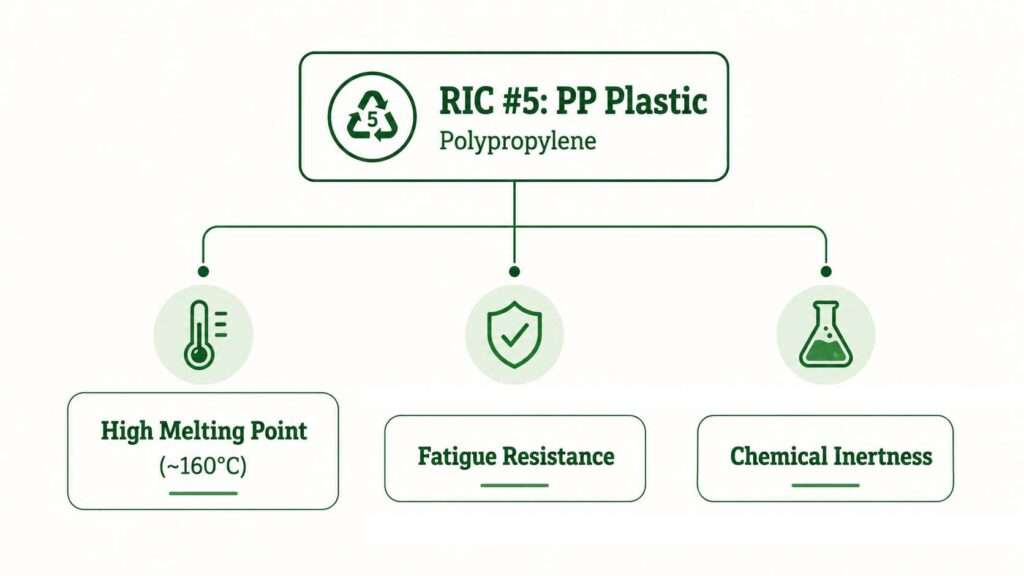
The #5 resin code is a unique identifier for the pp material and will allow recycling facilities to automatically and optically sort the material from PET (#1), HDPE (#2) and LDPE (#4).
Polypropylene Material Properties (PP Material)
Polypropylene material is used in various industries because of its combination of mechanical and thermal attributes.
- Low Density: Polypropylene material plastic has a density range from 0.895g/cm3 to 0.92g/cm3 and is one of the lowest densities commercially available plastics, which allows for a substantial amount of lightweighting when used for products.
- High Melting Point: The melting range of pp material is 130∘C~171∘C, which ensures that it retains its structure in the process of hot filling, steam sterilization and microwave heating.
- Chemical Resistance: Polypropylene has the characteristics of high resistance to organic solvents, degreasing agents, dilute acids and alkalis, suitable for chemical containers, battery housing, etc.
- Durability & Fatigue Resistance: Polypropylene material l plastic is used throughout the industry for the living hinge on flip-top caps, having proven resistant to repeated mechanical flexing.
- Cost-Effectiveness: Polypro plastic is an economical option for high-volume production, due to its efficient synthesis and easy melt-processing.
Types of Polypropylene (PP)
Not all polypropylene plastic behaves identically. By modifying the polymerization conditions, chemical chemical producers formulate three main types of polypropylene:
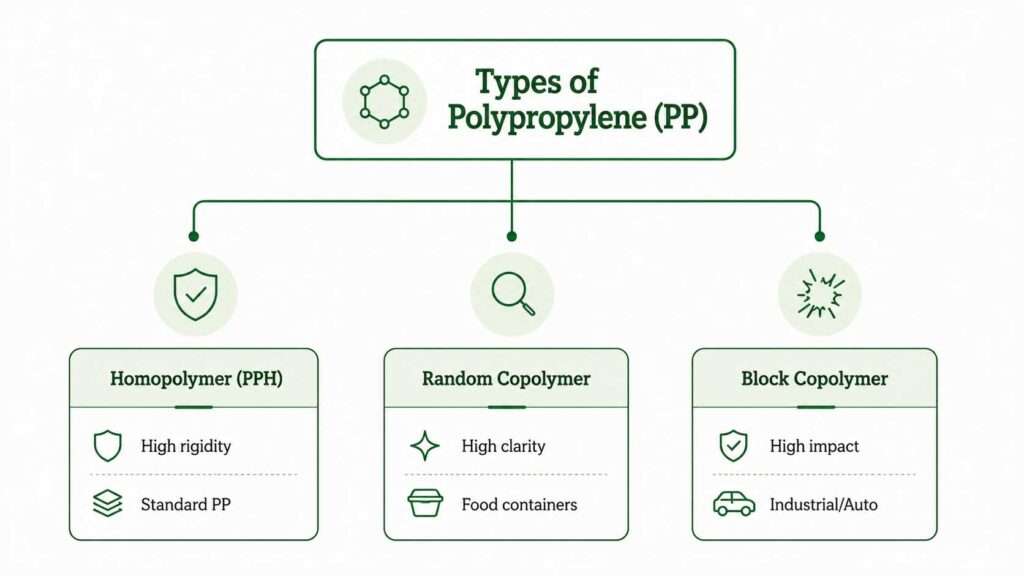
- Homopolymer PP (PPH): The most common general purpose pp material plastic. PPH is made with 100% polymerized propylene, which gives it a high stiffness, high tensile strength and excellent thermal stability.
- Copolymer PP (PPC): Made by polymerizing propylene and ethylene.
- Random Copolymer: Ethylene is randomly distributed along the polymer backbone, which improves the clarity and flexibility important to food storage tubs.
- Block Copolymer: Ethylene is placed in structured blocks that provide greater impact resistance at low temperatures for severe duty industrial applications.
- High Impact Polypropylene: A modified version of polypropylene developed to absorb high levels of kinetic impact without breaking, used in automotive parts and crates for cold storage.
Examples of PP Plastic Products in Daily Life
With its versatile physical characteristics, polypropylene is a plastic used in nearly all areas of today’s life:
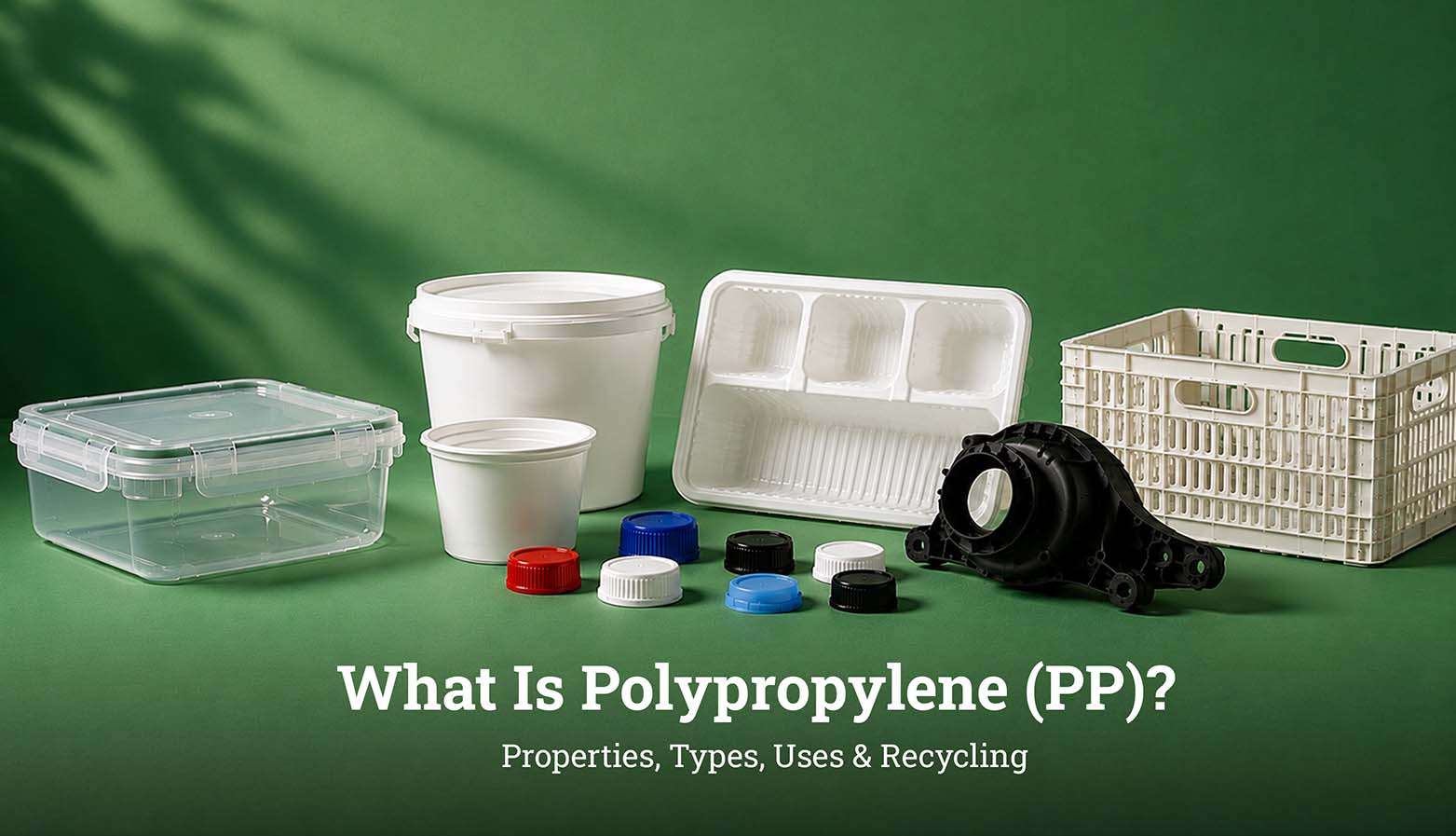
- Rigid Containers: Yogurt tubs, margarine tubs, microwaveable food trays and reusable storage boxes.
- Packaging includes woven sacks, BOPP (biaxially oriented polypropylene) flexible food wraps and bottle closures.
- Car Bumpers, Car Interior Trims, Dashboard Panels, and Lead Acid Battery Cases.
- Medical & Laboratory: Autoclavable syringes, specimen vials, petri dishes and IV bags.
- Non-woven surgical masks, thermal underwear, synthetic carpets and industrial ropes are all examples of textiles & fibers.
- Home Appliances: Kitchenware for dishwashers, vacuum cleaner housings and washing machine tubs.
Applications of Polypropylene by Industry
As a versatile material for plastic manufacturing, the demand for pp is high in four main industrial sectors:
Textile Industry
The non-woven fabrics are used in surgical gowns, personal protective equipment (PPE), surgical wipes, and geotextiles are manufactured by spunbound and meltblown polypro plastic fibers.
Packaging Industry
The material used for both rigid containers and flexible BOPP films is pp, because of its good moisture barrier properties, transparency and food contact regulation.
Automotive Industry
Lightened compounds with polypropylene plastic materials are used by automotive engineers in order to reduce the weight of vehicle components and enhance their fuel efficiency and overall emission reduction.
Construction
Since pp for plastic is not chemically corroded and doesn’t absorb moisture, it is used to produce long-lasting drainage pipes, wall panel linings and insulation membranes.
PP Granules & Recycled Polypropylene (rPP)
Once polypropylene products reach the end of their useful life, returning them to the manufacturing loop requires converting them into clean recycled pp granules.
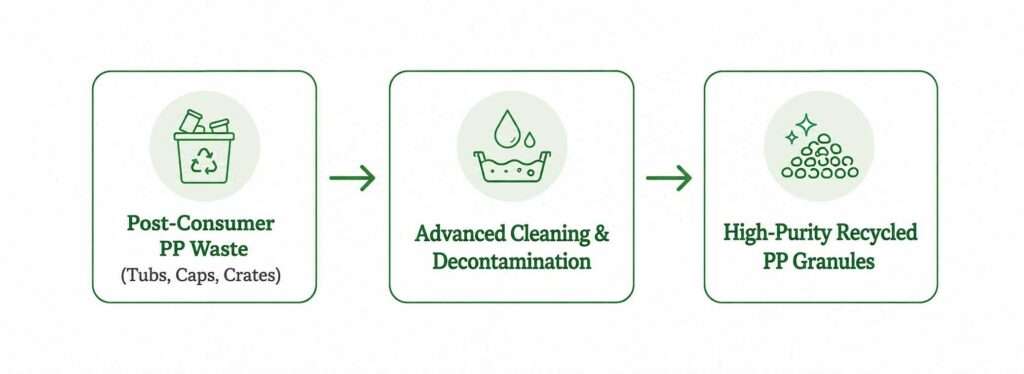
By compounding recovered pp material plastic into re-engineered granules, manufacturers can easily incorporate post-consumer recycled pp granules into their high speed molding equipment. The use of verified recycled pp granules instead of virgin resin can reduce the enterprises’ scope 3 GHG emissions without compromising the performance of the products.
How Is Polypropylene Recycled at Banyan Nation?
The recycling of pp for plastic was technically problematic in the past because of odor, thermal degradation and color contamination by mixed post-consumer waste.
We work to overcome these issues at Banyan Nation by employing advanced cleaning and decontamination technology and recycling our post-consumer pp for plastic waste to produce our high-purity recycled pp granules known as Better Plastic™.
Our closed loop recycling is comprised of four major steps:
- High-Tech Sorting & Aggregation: Highly using optical sorters to separate the post-consumer pp material plastic from the other resin streams.
- Proprietary Cleaning Technology: Using scientific hot washing procedures to remove deep-seated organic contaminants and odors.
- Re-Engineering: Purified flakes re-extruded and compounded to generate consistent and higher flow recycled pp granules.
- Closed-Loop Supply: Providing high-grade rPP to the major FMCG, automotive, and consumer goods brands for use as replacement for virgin petrochemical resins.
Future of Polypropylene in a Circular Economy
Circular material flow is the future of polypropylene. With the advent of the Global trend of Extended Producer Responsibility (EPR) regulations, using only fossil-based polypropylene plastic is not a sustainable option.
Mechanical hot-washing, scientific decontamination and chemical recycling are advancing, and recycling pp granules are now indistinguishable from virgin resin. Plastic waste can be drastically decreased and dependence on virgin petrochemicals can be reduced in the global manufacturing sector by designing products for easy disassembly and by incorporating secondary pp material into new manufacturing lines.
Conclusion
By exploring the characteristics of polypropylene plastic, one can gain insight into its essential place in today’s industrial applications. pp plastic offers high heat resistance, chemical resistance, structural strength, and flexibility that makes it useful in a wide range of applications from flexible packaging to structural automotive parts. Adopting a circular recycling approach and using high-purity recycled pp granules allows brands to maintain the convenience of polypropylene products and to create a sustainable, low-carbon future.
FAQ's
Is polypropylene a plastic, and what recycling number is it?
Yes, polypropylene is a plastic belonging to the polyolefin resin family. It is assigned Resin Identification Code #5 (RIC #5).
Is polypropylene plastic difficult to recycle?
Mechanically recycling polypropylene pp plastic was historically challenging due to odor absorption and color contamination. However, modern hot-washing technologies and optical sorting now allow post-consumer pp material to be processed into high-purity recycled pp granules suitable for demanding applications.
What is PP material used for?
PP material is used for food containers, bottle caps, living hinges, automotive bumpers, battery cases, medical devices, synthetic carpets, and non-woven fabrics like surgical masks.
Is polypropylene a hard or soft plastic?
Polypropylene pp plastic is classified as a semi-rigid to rigid plastic. It offers high resistance to cracking and bending while maintaining enough flexibility to withstand heavy impact without shattering.
Are polypropylene (PP) products recyclable?
Yes, pp plastic products are recyclable. Recovered materials are collected, shredded, washed, and extruded into recycled pp granules to manufacture new packaging, automotive parts, and industrial goods.
Making recycled packaging the norm.
CITATIONS:
- Polymer Chemistry Journal. Thermal Stability and Rheological Behavior of Polypropylene Homopolymers vs. Copolymers in Multi-Pass Extrusion.
- Association of Plastic Recyclers (APR). Design Guide for Polypropylene (PP) Circular Packaging and Pellet Decontamination Protocols.
- Journal of Applied Polymer Science. Comparative Lifecycle Assessment of Virgin Polypropylene vs. Post-Consumer Recycled Polypropylene (rPP) in Industrial Applications.
 International E-Waste Day 2026: What It Means and How to Take Part
 What is Waste Disposal: Methods, Types, and Real-World Examples
 What Is Polyolefin? Types, Properties, Uses and Recyclability
 World Rivers Day 2026: Date, Theme, History and How to Take Part
 Zero Emissions Day 2026: What It Is, Why 21 September and How to Take Part