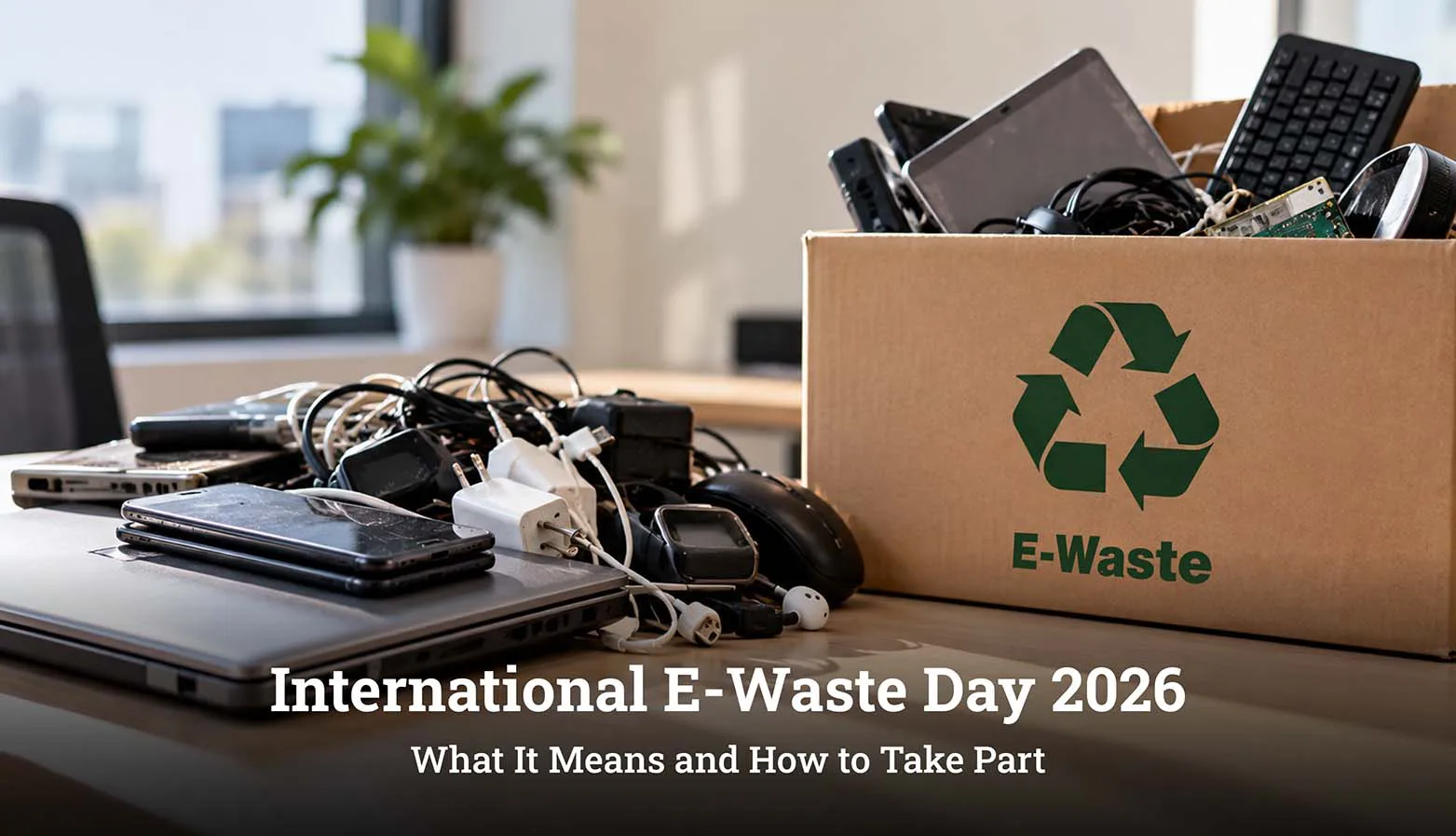
International E-Waste day is observed on 14th October every year. The WEEE Forum created this worldwide awareness day to draw attention to the huge amount of e-waste produced globally. Mobile phones, laptop computers, cables and circuit boards are accumulating at a quicker rate than the municipal systems can handle them as households and businesses upgrade their technology at unprecedented rates.
The overall aim of international e waste day is to encourage consumers, businesses and policy makers to stop all e waste items from entering landfills and to put them in a certified e waste recycling stream. E waste collection day events successfully separate toxic items such as lead and mercury, and valuable metal such as gold, silver, copper or palladium are being recycled to create new devices.
Individuals and corporate organizations alike are easily able to participate in International E Waste Day 2026. Individual households can take out their unused electronics from drawers and cupboards and bring them to drop-off locations or official electronics drop-off centers. Businesses have an opportunity to celebrate this day by implementing e wasteday collections, an IT asset disposal policy audit, and working with registered Producer Responsibility Organizations (PROs). Everyone who participates in international e waste day or e waste recycling daycontributes to preventing environmental damage and reducing natural ecosystems, and to the global transition towards a secondary resource economy.
Why Does the World Need an E-Waste Day?
Electronic waste is the world’s fastest-growing solid waste stream because of the rapid rate of technological innovation and the shorter life spans of products. The UN’s Global E-Waste Monitor estimates that globally more than 62 million metric tonnes of e-waste are produced every year, which is expected to increase to more than 82 million by 2030. Sadly, only 23% of this world’s e waste day is officially recorded as being “collected and recycled properly.
Hazardous heavy metals and toxic chemicals leach out into surrounding soils and groundwater tables when electronics are thrown in regular landfills or processed in unorganized scrap yards. Also, disposal of e-waste is a waste of precious finite resources that need to be mined again with energy intensive processes. A special day for e-waste collection can set momentum in motion for the world to tackle these environmental threats. International E Waste Day highlights the fact that at the end of their lives, e-waste is not waste, but valuable material reserves that need to be retrieved through formal e-waste circular recycling systems in order to protect public health and conserve natural resources.
How the World Observes E-Waste Day
Across the globe, communities, educational institutions, and enterprises unite on world e waste day. World e waste day is celebrated by communities, schools, and businesses around the world to raise awareness and action by coordinating e waste awareness campaigns.
- E-Waste Drives: Temporary collection sites are established by municipalities for the safe disposal of old computers, appliances, and wiring.
- School & University Competitions: School and university-based collection events and interactive sessions for teaching youth about urban mining.
- World e-Waste Day: Corporate IT Audits – World e-Waste Day is an opportunity for businesses to clean up e-waste, and ensure adherence to environmental laws.
- In India, drive-thrus, awareness walks in the residential areas, and training for informal workers are organized by registered recyclers, Producer Responsibility Organizations (PROs) and local aggregators to increase formal collection channels.
Earth Day vs. International E-Waste Day: What’s the Difference?
Both celebrations are about the environment, but they have very different aims and activities. Earth Day (on the 22nd of April) is an eco-friendly movement that covers the whole of the planet and includes all the themes of climate change, deforestation, plastic pollution, or biodiversity.
International E-Waste Day or Earth day E waste is on October 14, on the other hand, is specifically dedicated to electrical and electronic equipment (EWE) waste. An e waste initiative on earth day could address sustainability as a whole topic, but world E waste day focuses specifically on the issues of technology and the technical challenges, hazards, urban mining, and regulations associated with electronic products.
How to Recycle Your E-Waste Responsibly (Step-by-Step)
Good earth day e waste recycling day practices don’t contaminate the environment and ensure raw materials are safely recovered. Here are some easy steps to help recycle your end-of-life devices:
- Look through your drawers, closets, and storage boxes for devices. Divide items into groups including mobile devices, large appliances, cables/adapters, batteries.
- Backup and Wipe Personal Data: Backup all important files to the cloud or hard drive, then restore the device to factory settings, to completely wipe personal files.
- Take out Batteries and Storage Media: Take out detachable batteries, SIM cards and external memory cards. Tape the loose terminals of the lithium-ion batteries together to prevent short circuit while transporting.
- Find an Authorized E-Waste Collection Point: Find the state approved recyclers, Producer Responsibility Organizations (PROs) or brand drop-off bins near you.
- Drop Off or Schedule a Pickup: Give your items to a formal drop-off or arrange for a formal doorstep pick-up with a certified recycling partner.
Common E-Waste Recycling Mistakes to Avoid
- Disposing of E Waste in Regular Waste Bins:
- The Fix: Don’t combine electronics and household waste. Have a separate bin for e-waste and cables at home.
- Failing to address Data Security Risks:
- The Fix: If files are deleted or moved to the recycle bin they can still be recovered. Always do with a hard factory reset and disk wiping software before recycling.
- Not using unused devices in drawers:
- The Problem: OBSOLESCENCE is harming battery safety and stopping materials from going into the circular economy. Replace devices when they are no longer able to be used.
- Give waste to unlicensed scrap buyers:
- The Fix: Unregulated traders commonly use open burning and acid baths to get metals. Only give e-waste to formal, certified waste recyclers.
Banyan Nation’s Role in India’s Circular Economy
The disposal of e-waste is important but sustainable use of raw materials in the manufacturing industry is the panacea for the entire waste problem in India. Banyan Nation is at the forefront of the circular economy, using advanced sorts, hot-washing and compounding technology to convert post-consumer plastics into high purity traceable recycled resin. Banyan Nation connects informal collection systems with formal industrial production, enabling global brands to fulfill their sustainability requirements easily and effectively. Discover how manufacturers achieve statutory targets and decarbonize their supply chains with tailored solutions from Banyan Nation Extended Producer Responsibility (EPR) solutions.
FAQ's
When is International E-Waste Day celebrated?
International E-Waste Day is observed every year on 14 October. It was founded by the WEEE Forum to encourage citizens and organizations globally to collect, repair, or properly recycle their end-of-life electrical and electronic equipment.
What is the theme of International E-Waste Day 2026?
The annual theme for International E-Waste Day focuses on tackling fast-growing and overlooked electronic streams specifically “Fast Tech” (small gadgets, loose cables, electronic toys, and wireless earbuds that frequently end up in household trash) under actionable campaign themes like “Join the E-Waste Hunt: Retrieve, Recycle, and Revive!”
How can households in India recycle old electronics responsibly?
Households in India can recycle old electronics by utilizing authorized brand take-back programs, dropping off items at state-approved e waste collection day centers, or scheduling pickups through verified digital recycling platforms and PRO networks that route waste away from informal scrap yards.
What happens to e-waste if it isn't recycled properly?
When e-waste is dumped in landfills or processed by unorganized scrap dealers using crude methods, toxic heavy metals like lead, mercury, and cadmium leach into groundwater and soil. Open burning releases hazardous dioxins into the air, causing severe health issues for local communities and long-term ecosystem damage.
Why is e-waste collection important for the environment?
Organized collection prevents hazardous substances from entering ecosystems and reduces the need for virgin mining. Extracting precious metals from secondary e-waste requires significantly less energy and generates far fewer carbon emissions than traditional mining operations.
Making recycled packaging the norm.
CITATIONS:
- WEEE Forum. (2025). International E-Waste Day Guidance, Annual Campaign Themes, and Global Observance Protocols. Waste Electrical and Electronic Equipment (WEEE) Forum.
- United Nations Institute for Training and Research (UNITAR) & International Telecommunication Union (ITU). (2024). The Global E-waste Monitor 2024: Quantity, Flows, and the Circular Economy Potential. UNU/UNITAR.
- Ministry of Environment, Forest and Climate Change (MoEFCC), Government of India. (2022). E-Waste (Management) Rules, 2022 and Extended Producer Responsibility (EPR) Framework. Gazette of India.
 International E-Waste Day 2026: What It Means and How to Take Part
 What is Waste Disposal: Methods, Types, and Real-World Examples
 What Is Polyolefin? Types, Properties, Uses and Recyclability
 World Rivers Day 2026: Date, Theme, History and How to Take Part
 Zero Emissions Day 2026: What It Is, Why 21 September and How to Take Part